


.png)
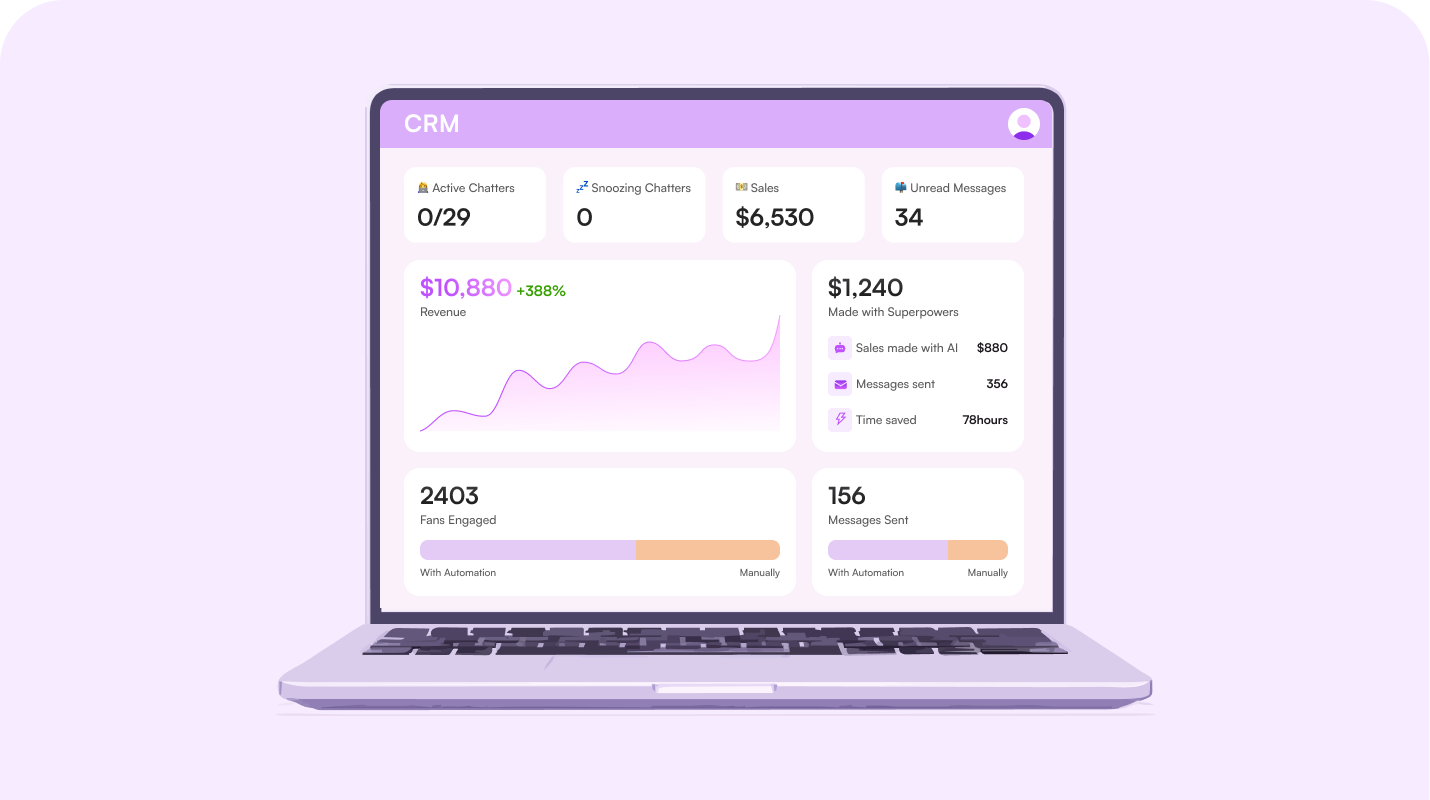
What once relied on gut feeling quickly turns into guesswork when revenue streams multiply, fan behavior shifts, and daily activity increases. At that stage, decisions need to be based on patterns, not assumptions.
OFM analytics make those patterns visible. By tracking revenue trends, fan behavior, and operational performance, analytics turn scattered activity into clear signals you can act on.
This guide shows how to use Supercreator’s analytics dashboard to monitor revenue and fan behavior from one centralized view, helping OFMs and agencies understand what is working and where to focus next.
What OFM Analytics Actually Mean
OFM analytics go beyond basic platform statistics. They are the operational data points that help creators and agencies understand how an account truly performs day to day, not just how it looks at a glance.
At a practical level, OFM analytics include revenue data such as subscriptions, PPV sales, tips, and rebills, tracked over time to reveal trends rather than isolated results. They also include fan behavior signals like purchase frequency, response patterns, and engagement depth, which show how different fans interact with content and messages.
Operational analytics add another layer. These insights connect content performance and chat activity to revenue outcomes, helping teams see which actions lead to spending, retention, or drop off. This is where OFM analytics differ from surface-level OnlyFans stats. Native platform metrics show what happened, while operational analytics adds the context needed to understand why it happened and how to repeat or improve it.
In practice, OFM analytics support an OnlyFans CRM-style workflow by bringing revenue data, fan behavior, and performance signals into a single operational view.
For agencies, this distinction matters. OFM analytics are not about collecting more numbers, but about turning everyday activity into clear performance insights that support smarter decisions at scale.
Why Analytics Matter for OnlyFans Creators and Agencies
OnlyFans analytics matter because they turn daily activity into predictable result.
- They show what actually drives revenue: Instead of guessing which messages, offers, or content perform best, analytics make it clear what leads to subscriptions, PPV purchases, tips, and rebills.
- They reveal fan lifecycle stages: Analytics help teams understand how fans move from new subscribers to active buyers or disengaged users, making it easier to time messages and offers more effectively.
- They reduce burnout and inefficiency: Data highlights where effort converts and where it does not, helping creators and chat teams focus on high-impact actions instead of spreading energy too thin.
- They enable consistent agency scale: For agencies managing multiple creators, analytics create a shared source of truth, allowing decisions to stay consistent across accounts, teams, and growth phases.
Overview of Supercreator’s Analytics Dashboard
In a real OFM workflow, analytics are only useful if they answer everyday questions quickly. How is revenue trending? Are fans buying less or just buying differently? Is performance slipping or simply normalizing after a spike?
Supercreator’s analytics dashboard is built to answer those questions from one place.
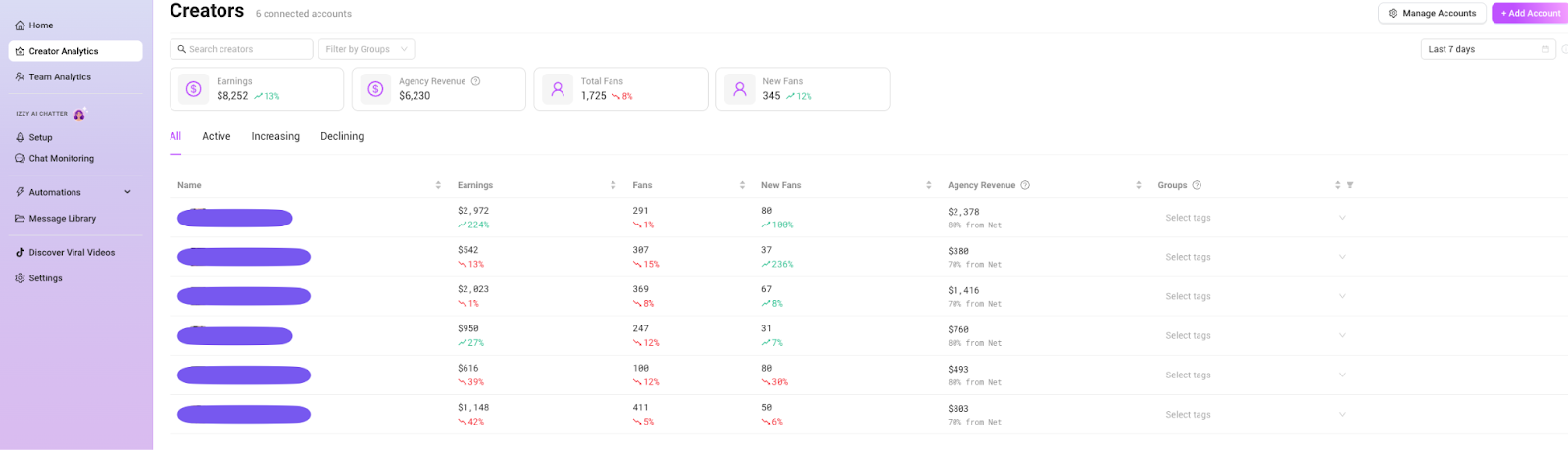
The dashboard provides a centralized view of revenue so OFMs can see how income evolves instead of reacting to single days. This helps teams spot meaningful changes early, whether that is steady growth, gradual decline, or volatility tied to specific actions.
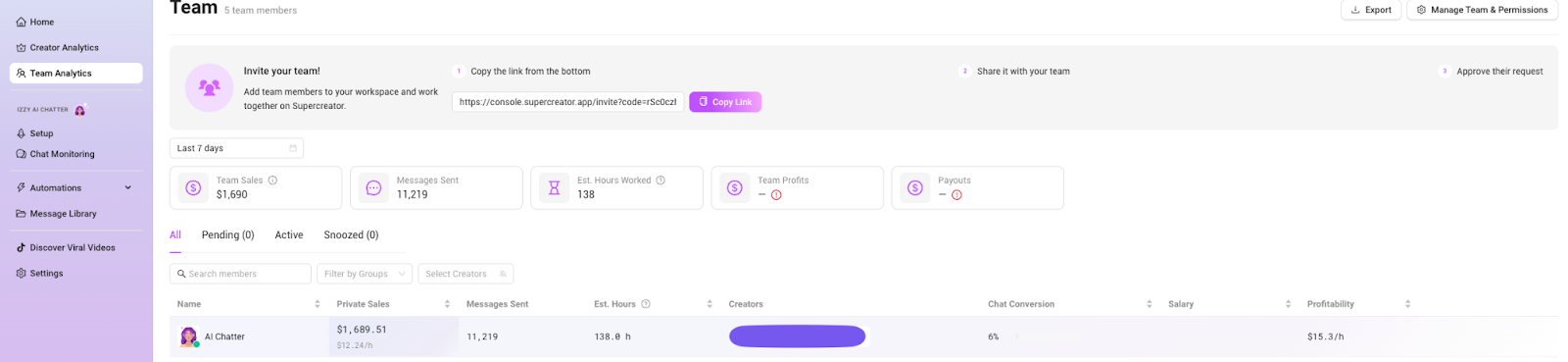
Fan behavior signals add context to those numbers. Rather than looking at revenue in isolation, the dashboard helps teams understand how fans engage, purchase, and respond across different stages of their lifecycle. This makes it easier to tell whether a revenue shift is driven by fan mix, engagement quality, or timing.
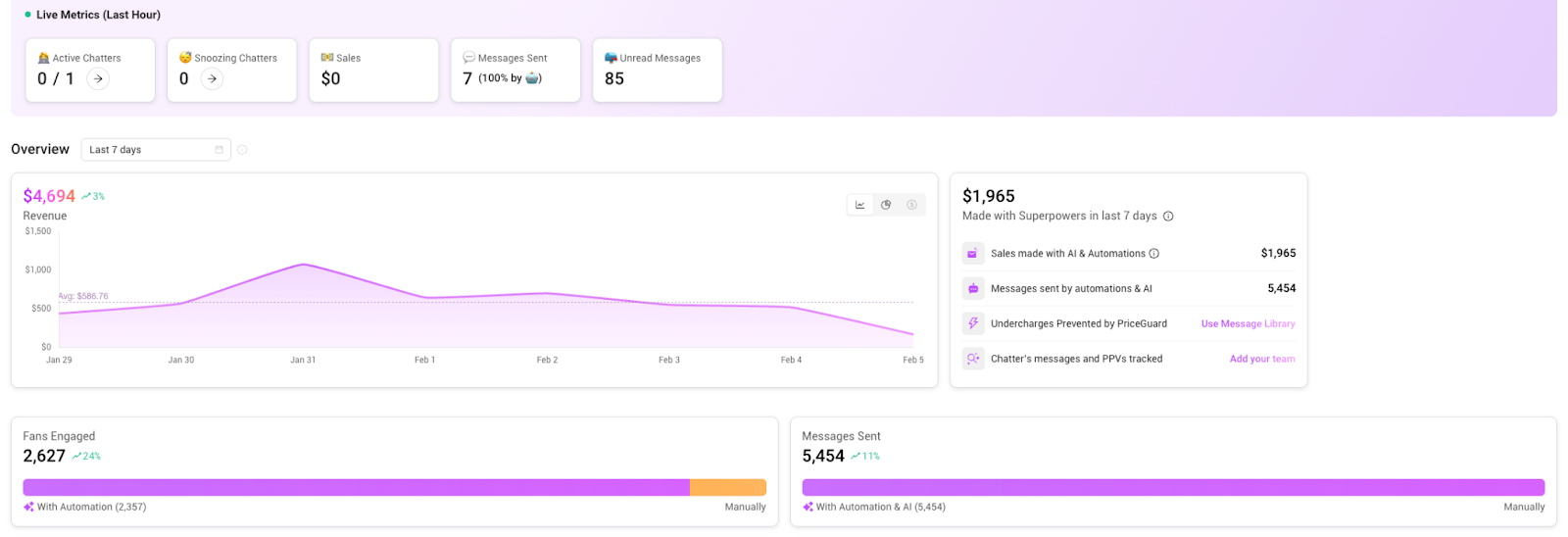
Performance trends across time help OFMs move from reactive to deliberate decision-making. By reviewing patterns over consistent periods, teams can evaluate what is actually working and avoid chasing short-term noise.
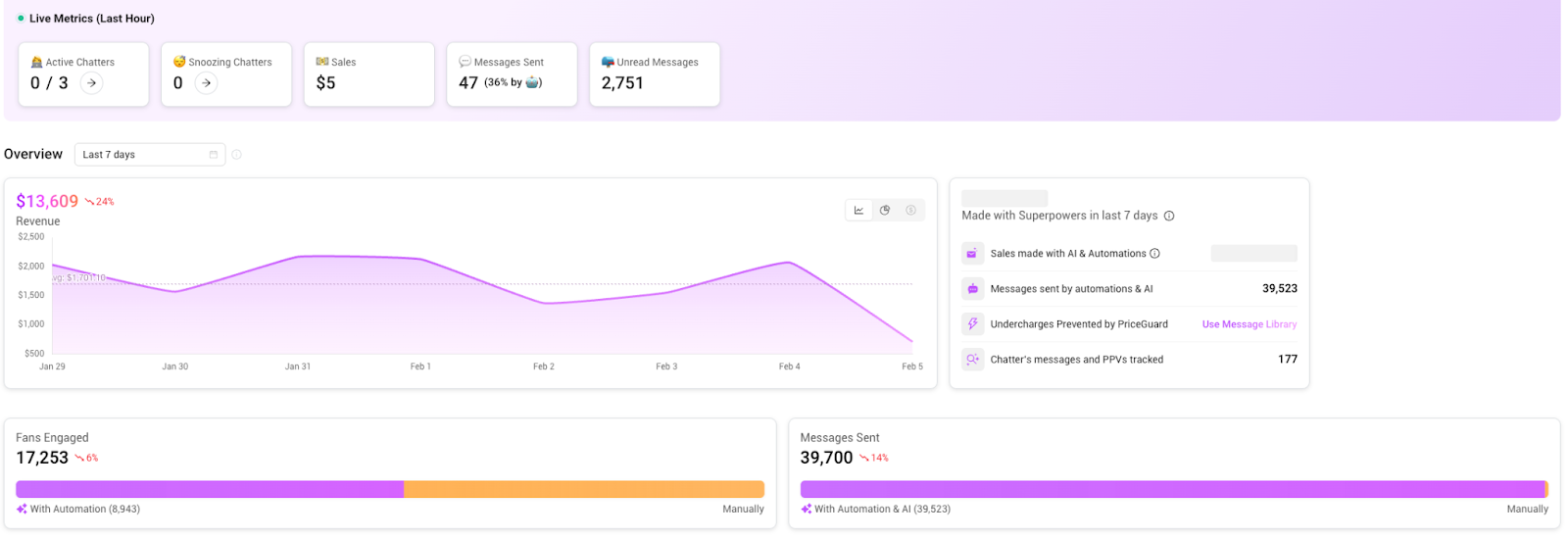
Taken together, these insights function as account health indicators. The dashboard is not just a reporting tool, but a way to assess stability, identify risk, and decide where attention is needed before problems compound.
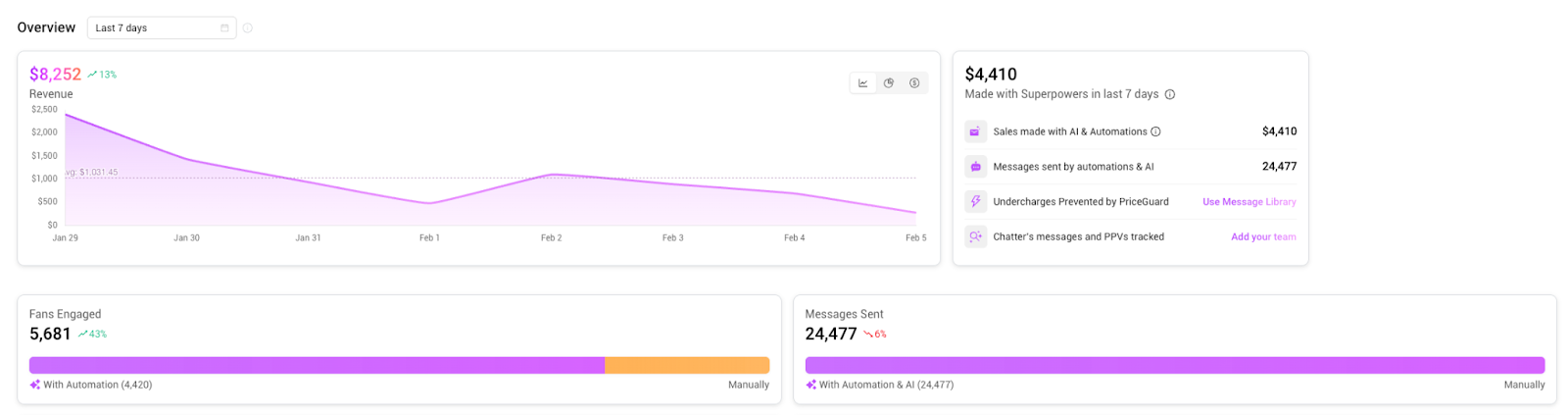
Tracking Revenue With Supercreator Analytics
Revenue tracking in OFM is about understanding patterns that repeat. Supercreator’s analytics show how revenue changes over time across subscriptions, PPVs, tips, and rebills.
Revenue trends over time
Looking at performance across days, weeks, and longer periods helps separate real growth from short-term noise. This makes it easier to spot steady improvements, slow declines, or plateaus without overreacting to single days.
PPV performance signals
PPV data becomes useful when viewed comparatively. Patterns show which types of drops, pricing ranges, or timing consistently perform better, instead of fixating on one successful or failed send.
Subscription and rebill behavior
Tracking renewals and lapses reveals whether revenue is driven by retention or constant replacement. This helps teams understand stability and forecast more accurately.
Interpreting spikes and drops
Spikes and dips only matter in context. Analytics help connect them to actions, timing, or fan segments, making it clear whether a change is meaningful or just situational.
The goal is not to monitor every number, but to recognize repeatable revenue patterns that support smarter decisions over time.
Understanding Fan Behavior and Spending Patterns
Fan behavior analytics help answer one core question: who should you focus on next, and why.
- High value fans vs low engagement fans: Fan behavior data helps distinguish fans who consistently interact from those who remain passive. This distinction matters because engagement patterns often indicate where future spending and retention are most likely to come from.
- Repeat buyers vs. one-time spenders: Purchase history shows whether fans tend to buy repeatedly or convert once and stop. Understanding this difference helps teams adjust pacing, follow-ups, and offer structure instead of applying the same approach to everyone.
- Lurkers, tippers, and early churn risks: Behavior trends make it easier to spot fans who interact lightly or begin disengaging over time. Changes in response frequency, activity, and spending often appear before cancellations or long-term drop off.
- How behavior insights guide chat priorities and timing: Behavior data informs who should be prioritized and when messages are most likely to land. This allows chat teams to align effort, timing, and message flows with how fans actually behave across their lifecycle.
Turning Analytics Into Action
Analytics only matter when they influence what happens next. This section focuses on how OFMs and agencies use data to make concrete changes to daily workflows, messaging, and content decisions.
- Adjusting content cadence based on trends: Analytics show how changes in posting frequency affect engagement and revenue over time. This makes it easier to increase or slow content output based on what consistently performs, rather than guessing or reacting to short-term results.
- Optimizing message flows using behavior data: Behavior patterns indicate when fans are most likely to respond, purchase, or disengage. Message flows can be adjusted to match these patterns, improving timing, pacing, and overall effectiveness without increasing volume.
- Improving fan segmentation: Analytics help group fans based on engagement and spending behavior. This allows OFMs to tailor messaging, offers, and attention levels more accurately instead of using the same approach for everyone.
- Scaling what works and cutting what does not: Performance trends make it clear which actions reliably contribute to revenue and retention. Successful patterns can be repeated across accounts or campaigns, while low-impact efforts can be reduced or removed to save time and resources.
Common Mistakes When Reading OFM Analytics
Even strong analytics lose value when they are misread or overinterpreted. These are some of the most common issues that lead OFMs to make the wrong decisions.
- Obsessing over daily fluctuations: Daily changes are often driven by timing or short-term activity and rarely reflect meaningful trends.
- Tracking too many metrics: Monitoring too many data points at once makes it harder to focus on signals that actually influence performance.
- Focusing only on revenue: Revenue shows results, but does not explain behavior. Ignoring engagement and interaction removes important context.
- Making changes without enough data: Adjustments made on limited data can lead to false conclusions and inconsistent outcomes.
Why Supercreator Works for Data-Driven OFM Teams
Supercreator is built around how OFMs and agencies actually operate. It brings revenue data, fan behavior, and performance signals into one place so teams can understand what is happening without stitching together spreadsheets or exporting reports.
The focus is clarity. Analytics are presented in a way that supports daily decisions instead of overwhelming teams with noise. This makes it easier to manage multiple creators, align chat teams, and maintain consistency as operations scale.
By centralizing insights and keeping them actionable, Supercreator supports growth without sacrificing personalization. Teams can scale processes, improve performance, and stay in control of how accounts evolve.





.png)

